




How CTOs Should Justify an AI Investment Strategy to the Board
The era of justifying AI investments with vague promises of "the future" is over. Today, boards expect a clearly defined AI investment strategy supported by concrete financial models, strategic alignment, and measurable business impact. This blog post outlines how CTOs can ensure their proposals not only gain approval but also propel the organization forward.

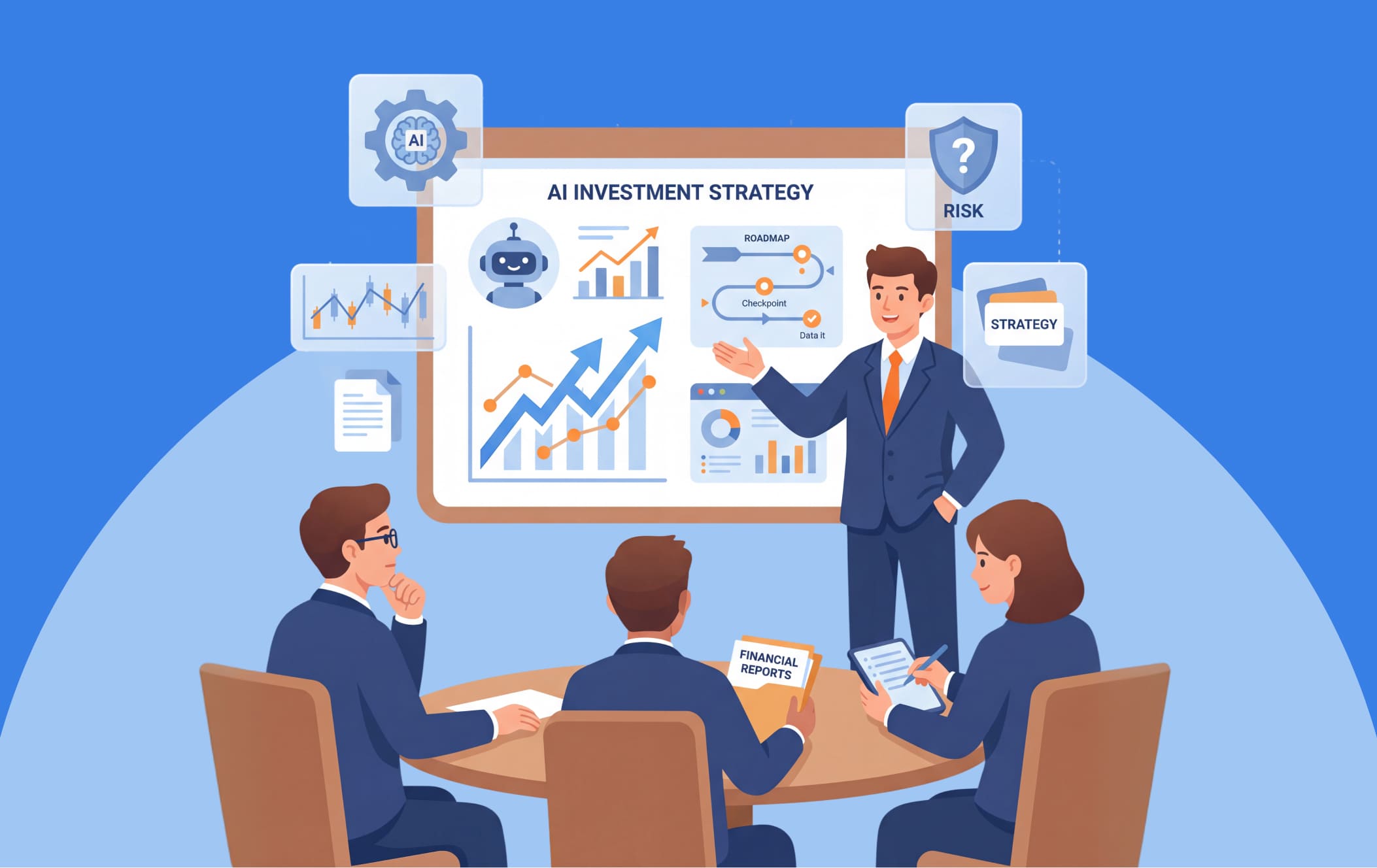
Picture the scene. It's a Tuesday morning in Q3. A CTO walks into the boardroom carrying 18 months of conviction, a carefully constructed slide deck, and a $4.2 million AI investment proposal he genuinely believes will transform the company's competitive position. The CTO has the technical architecture mapped. He has the vendor shortlisted. He has his engineering team ready.
However, the CTO does not have board approval for the AI investment strategy. The CFO has questions about the financial model. The risk committee wants an independent assessment. One non-executive director wants to understand how this AI investment strategy aligns with the company's broader strategic plan and financial priorities.
This scene, in various forms, plays out in boardrooms across industries every week. And it almost always has the exact root cause.
"Failure is rarely a bad idea. It's a translation problem. The CTO spoke about technology. The board needed to hear business."
Three Unspoken Questions
Every board member, regardless of background, is silently running the same three-question filter on every investment proposal that lands in front of them. Understanding these questions is the most direct route to a proposal that gets approved.
1. Will this make or protect money?
AI proposals framed purely as growth investments face a higher evidentiary bar than those framed as risk-reduction or competitive-defense investments.
A proposal that says "this saves us $3M in fraud losses annually" is, paradoxically, often easier to approve than one that says "this will grow revenue by 10%" — because the causal chain is shorter and the assumptions are fewer. If your AI investment strategy has a defensive dimension — cost avoidance, risk mitigation, regulatory compliance — lead with it.
2. What are we risking if this goes wrong?
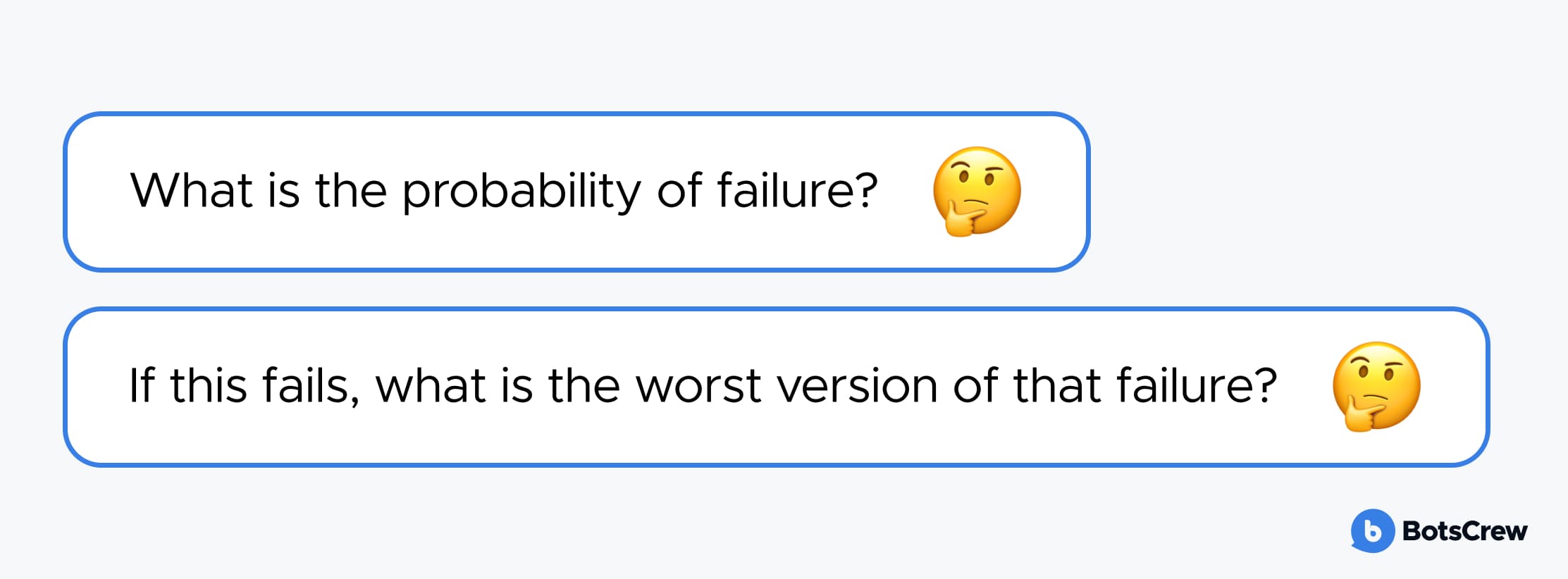
Boards think about downside asymmetry. The question isn't just "what is the probability of failure?" but "if this fails, what is the worst version of that failure?" AI investments carry categories of risk that most technology investments don't: model bias leading to discriminatory outcomes, data breaches, regulatory action, and reputational damage that can be amplified rapidly by the media.
Demonstrate that you have a comprehensive, credible framework for managing the things that could go seriously wrong. A board that is satisfied with your risk management approach will approve an AI investment strategy that they would otherwise defer indefinitely.
3. Can we trust the people asking for this?
Boards are approving people as much as they are approving proposals. If a CTO has a track record of accurate forecasting, of surfacing problems early, and of delivering what was promised, their proposals get approved faster and with less scrutiny than those from CTOs who have overpromised in the past.
The non-obvious corollary: your credibility is not just your personal track record. It is the aggregate track record of technology investments in your organization. If your predecessor left a trail of incomplete digital transformation projects, you are starting from a credibility deficit that no financial model can fully overcome. Acknowledging that legacy — and demonstrating explicitly how your approach differs — is more effective than ignoring it.
What the Best CTOs Do Differently
The best CTOs anticipate concerns before they arise, frame AI investments in terms the board already uses to evaluate capital allocation, and align their proposals with broader business priorities. Rather than positioning AI as an experimental frontier, they present it as a pragmatic tool for improving margins, accelerating growth, or reducing operational risk.
Start with the Outcome, Not the Technology
The most effective CTOs understand that the board's primary concern is business impact, not technological sophistication. Before a single line of architecture is drawn or a vendor is shortlisted, these leaders anchor the entire AI initiative in a specific, quantifiable business problem.
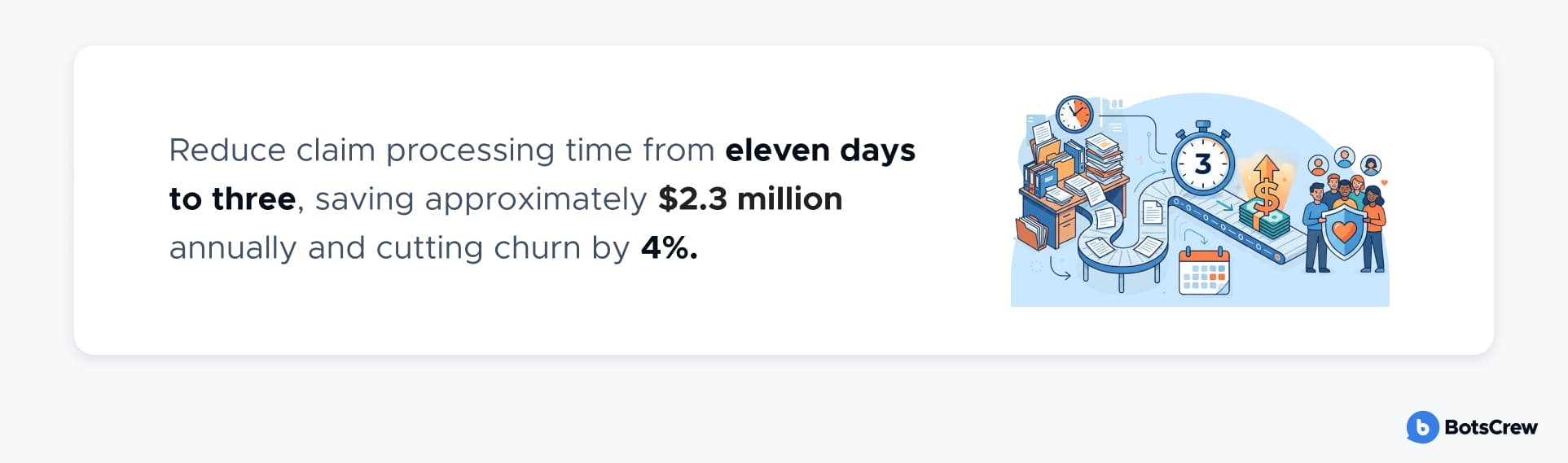
They move beyond generic statements like "improve operational efficiency" to articulate precise outcomes. For instance, instead of a broad goal, they might propose to "reduce claim processing time from eleven days to three, saving approximately $2.3 million annually and cutting churn by 4%." It is the result of weeks of dedicated work connecting technical capabilities directly to measurable business metrics.
Build Coalitions Before Building Decks
The single most reliable predictor of a positive outcome is whether key stakeholders, particularly the Chief Financial Officer (CFO), are already aligned before the board meeting even begins. These CTOs proactively build internal coalitions:
✅ They sit with the CFO to rigorously stress-test the financial model, ensuring its robustness and addressing potential concerns before it reaches the board.
✅ They walk the risk committee chair through the proposed governance framework in advance, demonstrating a proactive approach to mitigating potential risks.
✅ They brief the CEO on the competitive landscape and how the AI initiative strengthens the company's position.
By the time the formal presentation occurs, the board has had multiple informal touchpoints, making the meeting a confirmation of previously discussed strategies rather than a revelation of new information. This collaborative approach fosters trust and significantly de-risks the approval process.
Present Ranges
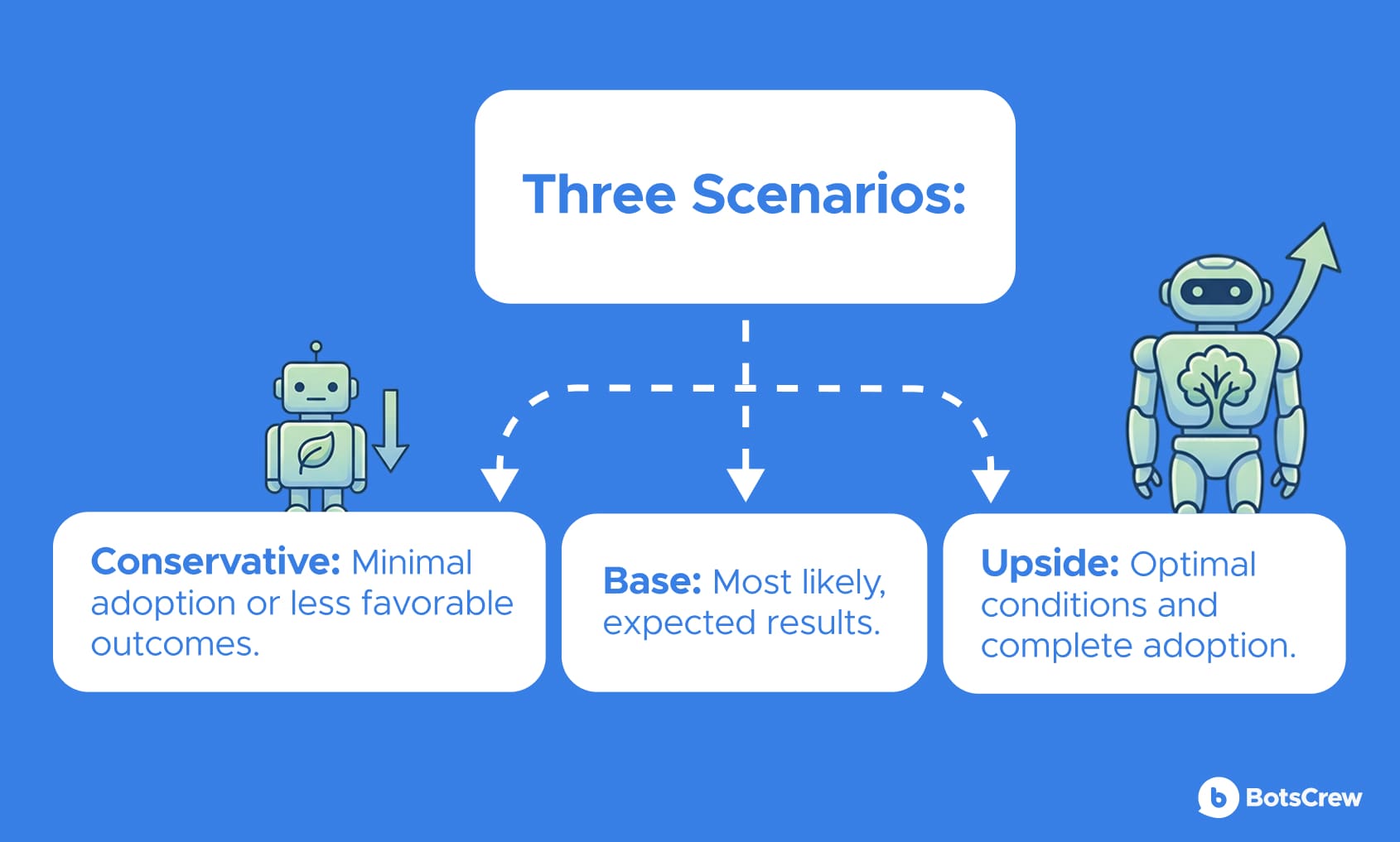
Boards are acutely aware that technology projections inherently carry wide confidence intervals. The most astute CTOs acknowledge this reality by presenting scenarios rather than single, definitive numbers.
Presenting a single figure, such as "we expect $5 million in savings," creates a precarious situation: if taken at face value, the CTO is held rigidly to it; if doubted, it can undermine the entire proposal. Instead, successful CTOs model three distinct scenarios:
✅ Conservative: Outlining outcomes under minimal adoption or less favorable conditions.
✅ Base: Representing the most likely and expected results.
✅ Upside: Projecting the potential under optimal conditions and favorable adoption.
This approach signals honesty and provides the board with a comprehensive range of possibilities they can logically evaluate and reason about.
Treat Governance as a Feature, Not a Constraint
The instinct of many CTOs is to minimize discussions around risk and governance, hoping to quickly move to the more exciting aspects of innovation and upside potential. However, the best proposals treat the governance and risk section not as a hurdle to clear, but as a critical opportunity to demonstrate organizational maturity and foresight.
A well-constructed AI risk framework signals that the CTO has thoroughly considered potential pitfalls and developed robust mitigation strategies. This proactive stance builds immense credibility, which extends beyond the risk discussion itself, strengthening the board's confidence in the financial projections and overall feasibility of the initiative.
Learn how to design AI solutions that meet the strictest data protection standards while enabling innovation. Align your AI initiatives with HIPAA and GDPR requirements — so you can reduce risk, accelerate approvals, and move from pilot to production with confidence.

Understand How Boards Evaluate AI Investment Strategy
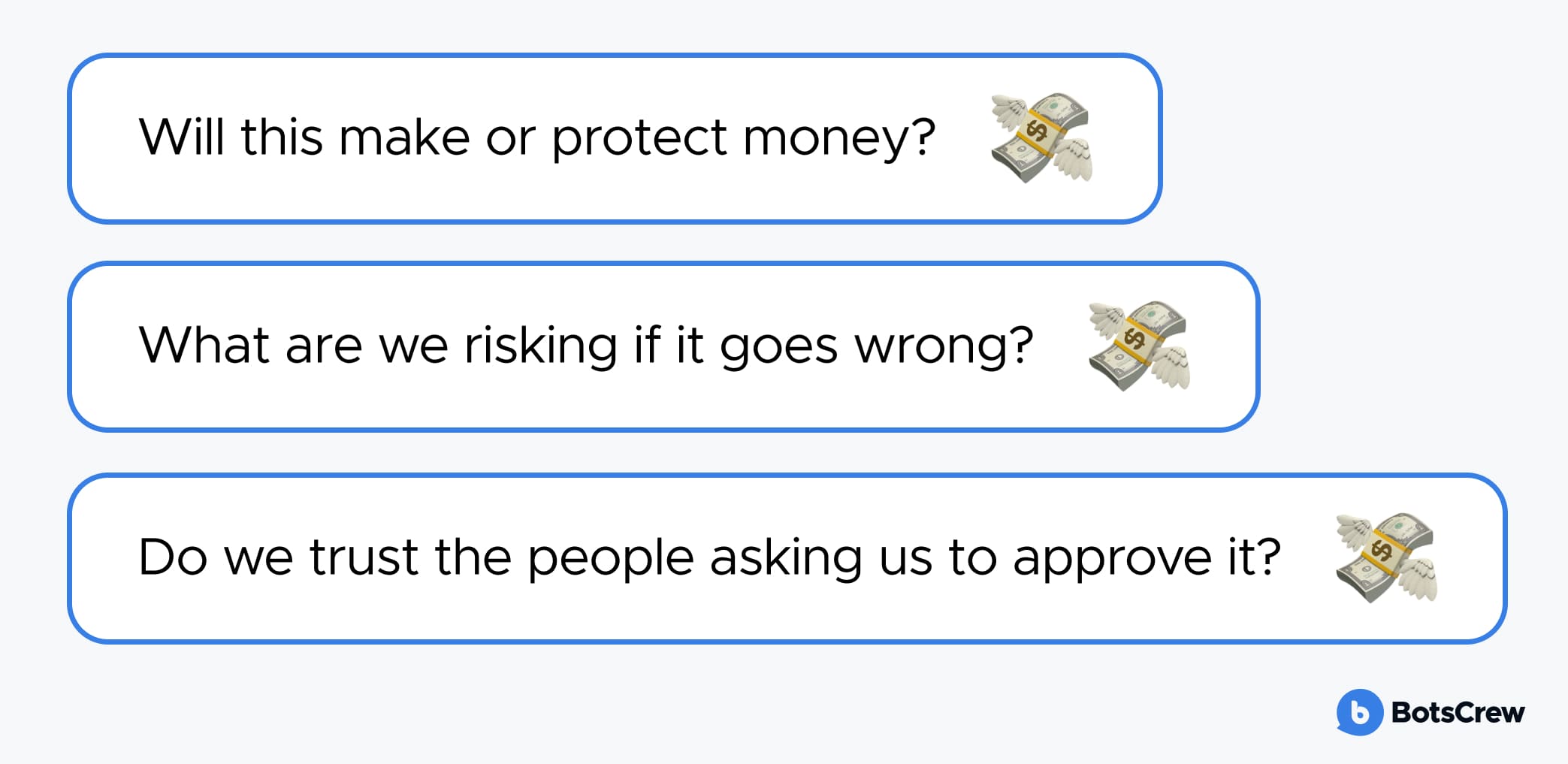
Most board decisions come down to three unspoken questions: Will this make or protect money? What are we risking if it goes wrong? And do we trust the people asking us to approve it? Every element of a strong AI investment strategy — the financial model, the risk framework, the phased structure — is ultimately an answer to one of those three questions.
Key criteria include:
— Return on Investment (ROI) and Payback Period. Boards seek clear financial benefits and a reasonable timeframe for recouping the initial investment.
— Risk Exposure. This encompasses technical, operational, ethical, and reputational risks associated with AI implementation.
— Strategic Alignment. The proposed AI initiatives must align with the company's overarching business strategy and objectives.
— Competitive Necessity. Boards assess whether AI adoption is crucial for maintaining or gaining a competitive edge.
— Execution Feasibility. Confidence in the organization's ability to successfully implement and manage the AI solution is paramount.
Frame AI as a Business Lever, Not a Technology Initiative
To secure board approval, CTOs must structure AI investments around one of these fundamental business drivers:
Revenue Growth
AI can directly contribute to top-line growth through various mechanisms:
— Increased Conversion Rates. AI-powered personalization and optimized customer journeys can lead to higher sales.
— Faster Sales Cycles. Automation of lead qualification and sales support can accelerate the sales process.
— Higher Customer Retention. Predictive analytics can identify at-risk customers, enabling proactive engagement and personalized retention strategies.
— Personalized Recommendations. AI-driven recommendation engines enhance customer experience and drive additional purchases.
Cost Reduction
AI offers significant opportunities for operational efficiency and cost savings:
— Automation of Manual Processes. AI can automate repetitive tasks, reducing labor costs and freeing up human resources for higher-value activities.
— Reduced Support Costs. AI agents for customer service have seen a dramatic increase in use, growing by 2,199% since January 2025, leading to significant reductions in support expenses.
— Lower Operational Overhead. Predictive maintenance and optimized resource allocation can minimize operational expenditures.
— Productivity Improvements. AI tools can enhance employee productivity across various functions. Here's how we implemented AI for corporate use at BotsCrew.
Planning an AI investment? Let's validate it. Book a free 30-minute session to explore use cases, architecture, and ROI before presenting your AI initiative to leadership.
Risk Reduction
AI can play a crucial role in mitigating various business risks:
— Compliance Automation. AI can monitor and ensure adherence to regulatory requirements, reducing the risk of penalties.
— Fraud Detection. Advanced AI algorithms can identify fraudulent activities more effectively than traditional methods.
— Knowledge Retention. AI-powered knowledge management systems can preserve institutional knowledge, reducing risks associated with employee turnover.
Quantify the Financial Impact
This is the most critical section for board approval, as it directly addresses financial evaluation criteria. CTOs must provide precise, data-backed projections supported by a structured AI cost-benefit analysis. The board's core question is simple: will this investment produce measurable financial returns, and how predictable are those returns?
Establish a Clear Financial Baseline
Before projecting value, you need to define the current state. This means identifying the existing costs, inefficiencies, or revenue constraints the AI initiative will address.
For instance, you might calculate the average cost of handling a customer support ticket, the length of the sales cycle, the number of hours employees spend searching for internal information, or the operational cost of processing documents manually. This baseline becomes the reference point against which improvement — and ultimately ROI — will be measured.
Estimate Realistic Performance Improvements
Once the baseline is defined, the next step is to estimate how AI will improve these metrics. These projections should be grounded in pilot results, internal experiments, or conservative industry benchmarks.
For example, AI copilots often reduce time spent on repetitive knowledge work by 20–40%, while customer support automation can reduce handling time by 30% or more.
Translate Operational Gains Into Financial Value
Operational improvements must then be converted into financial terms. Time saved becomes labor cost savings or increased productive capacity. Faster sales cycles translate into earlier revenue recognition and increased sales throughput. Automation reduces the need for incremental hiring as the company grows, improving operating leverage. In some cases, AI also reduces financial risk by minimizing errors, improving compliance, or preventing revenue leakage.
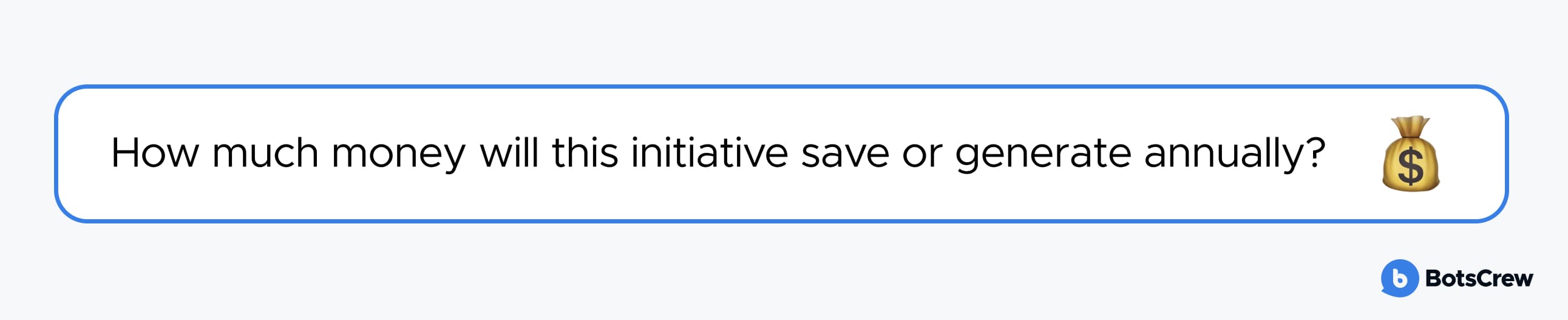
At this stage, the goal is to clearly answer a simple question:
Present ROI, Payback Period, and Long-Term Value
Finally, the proposal should summarize the investment required and the expected financial return. This includes the total implementation cost, the projected annual financial benefit, and the payback period. Most boards expect strategic technology investments to demonstrate meaningful returns within 12 to 24 months. Using a structured AI ROI framework helps ensure that financial projections are consistent, transparent, and grounded in measurable business outcomes rather than optimistic assumptions.
In addition to short-term ROI, presenting a 3-year financial projection helps position AI not as a one-time efficiency gain, but as a compounding strategic asset. Once deployed, AI systems often continue to deliver value with only incremental maintenance costs, improving long-term ROI.
It's essential to keep in mind a non-obvious point: payback period calculations are often "gamed" by including only the direct AI investment while excluding organizational change costs, such as:
— Change management and training — companies often budget 5–10% of a technology investment, whereas research suggests 15–20% for AI due to the profound shift in how people work.
— Integration complexity — AI rarely operates in isolation, and connecting it to existing data infrastructure, enterprise systems, and workflows almost always costs more than vendor estimates, with a good rule of thumb being to double the vendor's integration estimate in legacy environments.
— Data preparation and governance — cleaning, structuring, and governing data can account for 30–40% of total implementation effort.
Boards are increasingly aware of this. Including these costs may extend your payback period, but it makes your proposal more credible. A more extended, honest payback period is far better than a shorter, suspect one.
Identify High-Probability, High-Impact Use Cases
Narrow, well-defined use cases are easier to deploy, easier to evaluate, and far more likely to succeed. Instead of attempting to transform the entire company at once, successful companies begin with focused applications that can demonstrate measurable value quickly. This approach makes it easier to build a credible AI business case, supported by real performance data rather than projections.
The use case should also integrate naturally into existing workflows and have clearly defined success metrics. Solutions that enhance how people already work — without forcing major behavioral or operational changes — are adopted faster and deliver value sooner. These early wins play a critical role in strengthening the business case for AI, helping leadership and the board gain confidence in broader rollout and long-term investment.
📚 Internal assistants are one of the most reliable starting points. These tools help employees quickly find accurate information across internal systems, reducing time spent searching for documentation and improving productivity across teams.
🎧 Customer support automation is another proven use case. AI-powered assistants can handle routine inquiries, allowing human agents to focus on more complex issues. This reduces response times, improves customer experience, and lowers support costs.
💼 Sales enablement copilots also provide immediate value. These tools help sales teams prioritize leads, generate personalized outreach, and prepare for conversations, allowing them to focus on closing deals rather than administrative work.
📊 Finally, internal analytics copilots help teams access insights and generate reports faster. Instead of waiting for analysts, business users can interact directly with data, enabling faster and more informed decision-making.
Demonstrate Execution Feasibility
Even the strongest economic case can fail if the board doubts the organization's ability to execute. Boards are evaluating the potential upside and assessing delivery risk. CTOs must demonstrate that the company has the technical foundation, operational readiness, and leadership alignment required to implement AI successfully.
Prove Technical and Organizational Readiness
Execution feasibility begins with showing that the fundamental prerequisites are already in place. This includes having access to the necessary data and ensuring it is sufficiently structured, reliable, and usable. Many AI projects fail because of fragmented or inaccessible data. Demonstrating that your company understands its data landscape — and has already prepared it — signals AI readiness.
Infrastructure readiness is equally important. Boards want assurance that the organization can support AI workloads without significant disruption or excessive new investment. This does not necessarily mean building complex infrastructure from scratch, but it does mean having a clear plan for how AI systems will operate within existing environments.
Integration is another critical concern. AI rarely operates in isolation — it must connect to existing workflows, tools, and decision-making processes. CTOs should explain how the solution will fit into current operations and enhance them, rather than requiring large-scale process redesign.
Present a Phased Implementation Plan
Boards are far more likely to approve initiatives that follow a structured, incremental rollout rather than a large, all-at-once deployment. A phased approach allows the organization to validate assumptions, demonstrate early value, and reduce uncertainty before scaling further.
Most successful AI implementations begin with a focused pilot designed to prove feasibility and generate measurable results. This initial phase typically lasts several weeks and targets a clearly defined use case. Once validated, the solution can be gradually expanded to additional teams or workflows. Full deployment follows only after the organization has demonstrated both technical stability and business value.
Establish Clear Ownership and Accountability
Boards want to see that the initiative has strong leadership and well-defined responsibility across technical and business functions. Successful AI initiatives typically have executive sponsorship to ensure strategic alignment and resource allocation.
Technical ownership ensures the solution is properly implemented, maintained, and integrated. Equally important, business ownership ensures that the initiative remains focused on delivering measurable operational and financial outcomes. Finally, defining how success will be measured reinforces accountability.
Presenting to the Board: The Structure That Works
The best AI investment case in the world will fail if it is poorly presented. Here's the presentation structure that consistently performs best:
✅ Open with the business problem, stated in financial terms. Not "our customer experience needs improvement" but "we are losing approximately $X million annually to customer churn driven primarily by response time, and our current NPS of 34 is 12 points below our primary competitors."
✅ State the proposed solution in one sentence. The board does not need to understand the technology. They need to understand what it will do.
✅ Present the financial case with scenarios. Conservative, base, upside. Include the payback period prominently.
✅ Address risk explicitly and specifically. Not "we've identified the key risks and have mitigation plans" but the actual risks and the actual mitigations.
✅ Describe the governance structure. Who is responsible, what oversight exists, and what the escalation path is.
✅ State the ask precisely. Dollar amount. Approval for what, specifically. Timeline. Next decision point.
When CTOs demonstrate this level of preparation, the board no longer sees the initiative as a risky experiment. Instead, it becomes a structured, controlled investment with a clear path to execution and measurable results.
Book Your Free 30-Minute AI Strategy Session. Get expert guidance on identifying high-impact AI opportunities, planning realistic ROI, and securing board approval.