



Enterprise AI Agents Explained: What Businesses Need to Know in 2026
Everything decision-makers need to understand about enterprise AI agents — from how it operates under the hood to where it creates real business value, and what it takes to move from pilot to production.

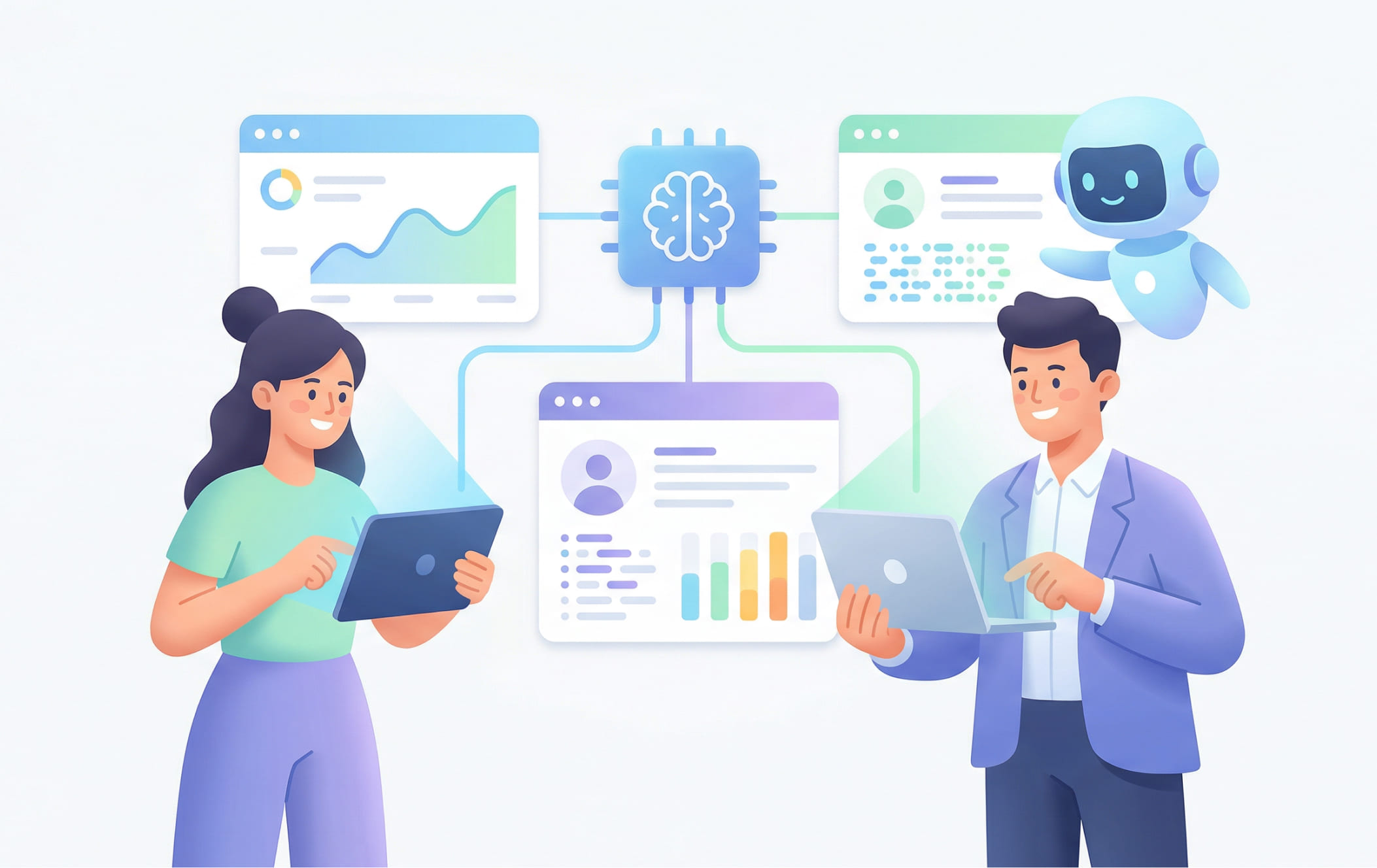
Enterprise AI is moving past experimentation. What started as isolated pilots and chatbot deployments is now evolving into something more operational — systems that don't just respond, but actively execute tasks across the business.
This is where enterprise AI agents come in. Unlike traditional AI tools, they operate across systems, interact with data in real time, and take action within defined workflows. In areas like customer retention, finance workflows, and internal operations, companies are starting to use AI agents to analyze data, continuously monitor signals, trigger actions, and reduce manual coordination work.
This article breaks down how agentic AI works under the hood, where it delivers the most impact in enterprise environments, and what it takes to move from pilot to production.
What Does Agentic Mean in AI: Agentic AI, Defined
What is an agentic AI for business? And how agentic AI works?
Agentic AI refers to advanced AI systems capable of operating autonomously to achieve specific objectives. These AI agents can plan, make decisions, take actions, and interact with users or their environment — often over extended periods and with minimal human intervention.
Unlike traditional AI that waits for explicit instructions, enterprise AI agents take initiative. It asks its questions, taps into memory for context, and springs into action on its own accord.
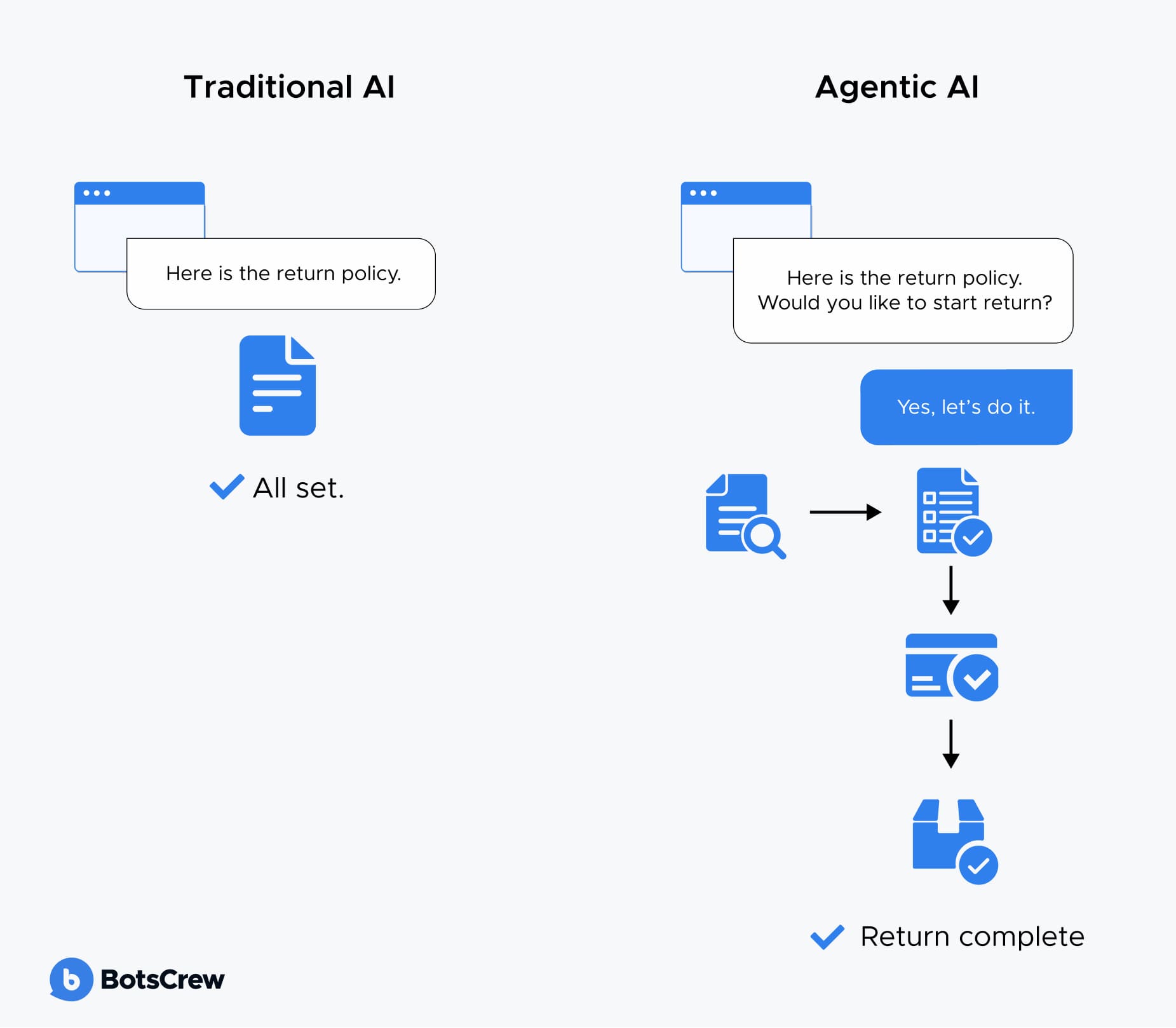
Let's say you ask a basic chatbot for your company's return policy. A traditional AI would show you the page and call it a day. But an agentic AI for business will serve up the policy and ask if you'd like to start a return. Say yes, and it'll grab your order number, fill out the form, verify your payment info, and wrap up the process — end to end, without you lifting a finger.
Key Components of Agentic AI
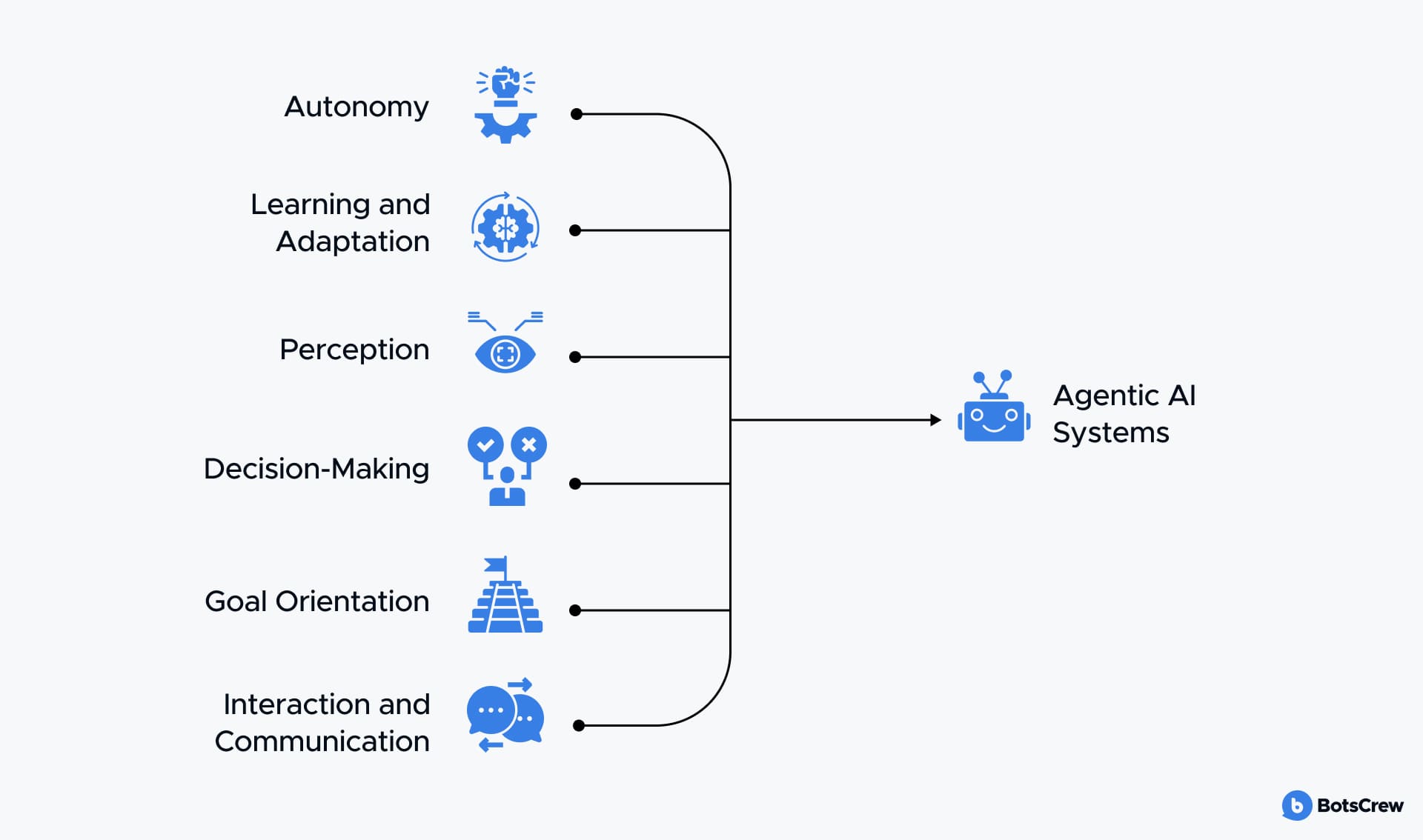
Here are the core traits that make agentic AI the backbone of the next-gen automation revolution:
🧠 Autonomous decision-making. Agentic AI makes its calls based on goals, real-time data, and environmental cues. Think of warehouse robots rerouting on the fly to dodge obstacles or reshuffling priorities to boost efficiency — all without a human in the loop. It's decision-making on autopilot, freeing up time and resources.
🎯 Goal-oriented algorithms. Unlike traditional AI that reacts to commands, agentic AI works with purpose. You can program it with specific outcomes — like closing X number of new deals this quarter — and it will chart the best course of action.
🔁 Adaptive learning. Agentic AI continuously refines its strategies based on feedback and new data. Whether it's a marketing virtual assistant learning how to better respond to user tone or a sales agent adjusting outreach based on past performance, these systems are always leveling up.
⚡ Real-time action. Whether it's dodging a digital threat in cybersecurity, navigating traffic in autonomous driving, or making snap decisions in financial markets — it analyzes, reacts, and executes in real-time. That's what makes it a powerhouse in fast-moving industries.
👁️ Perception. With sensors, IP cameras, and contextual awareness, Agentic AI can detect changes in the physical or digital environment. From identifying a product on a warehouse shelf to picking up on a user's sentiment in a chat, perception fuels more intelligent and intuitive responses.
💬 Interaction & communication. Through advanced natural language processing (NLP), agentic AI systems can understand, interpret, and respond to human input — and even collaborate with other agents. This makes them ideal for customer service, team workflows, and any use case where clear, dynamic communication is key.
How Does Agentic AI Work: A Look Under the Hood
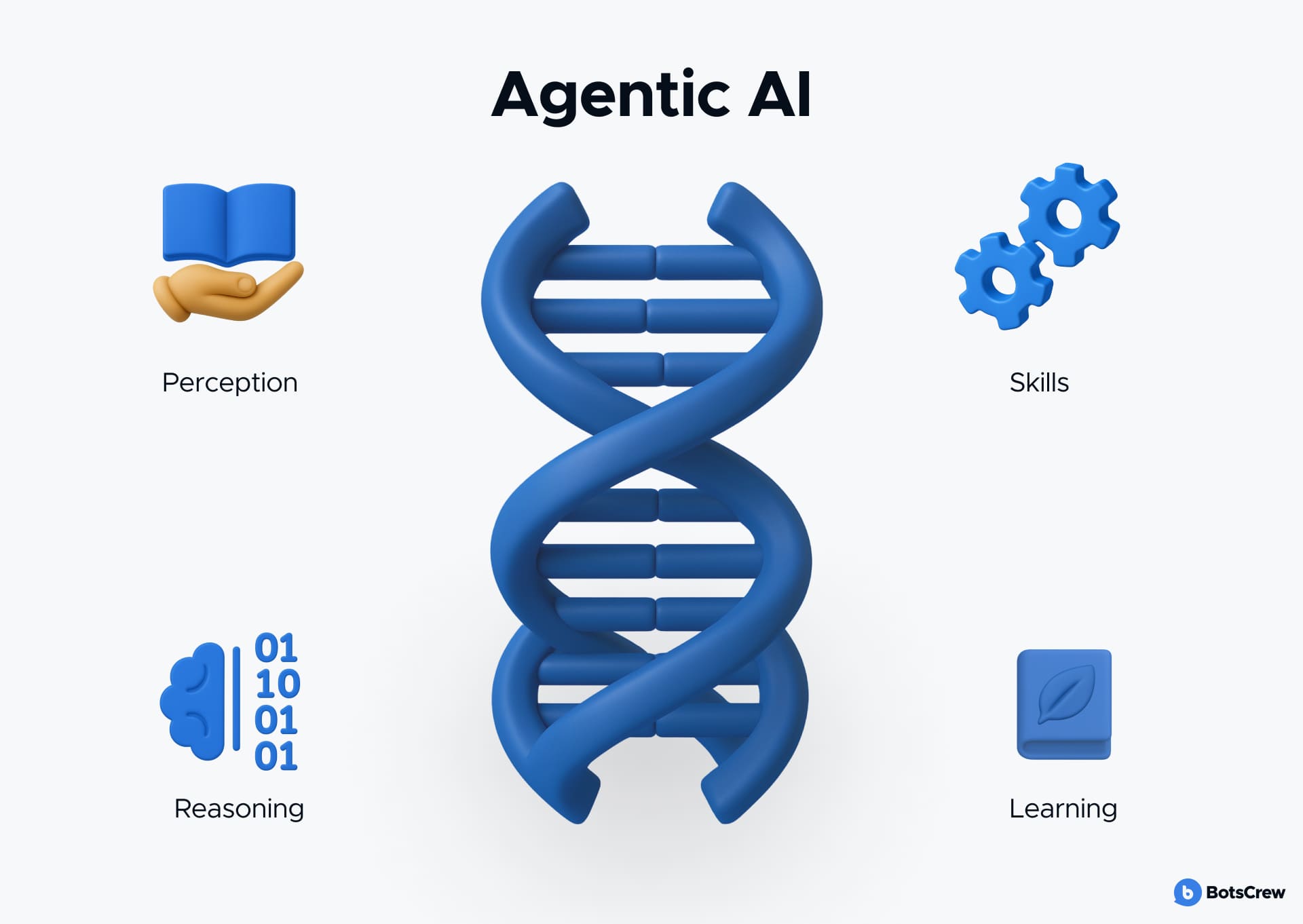
Here is how Agentic AI gets the job done:
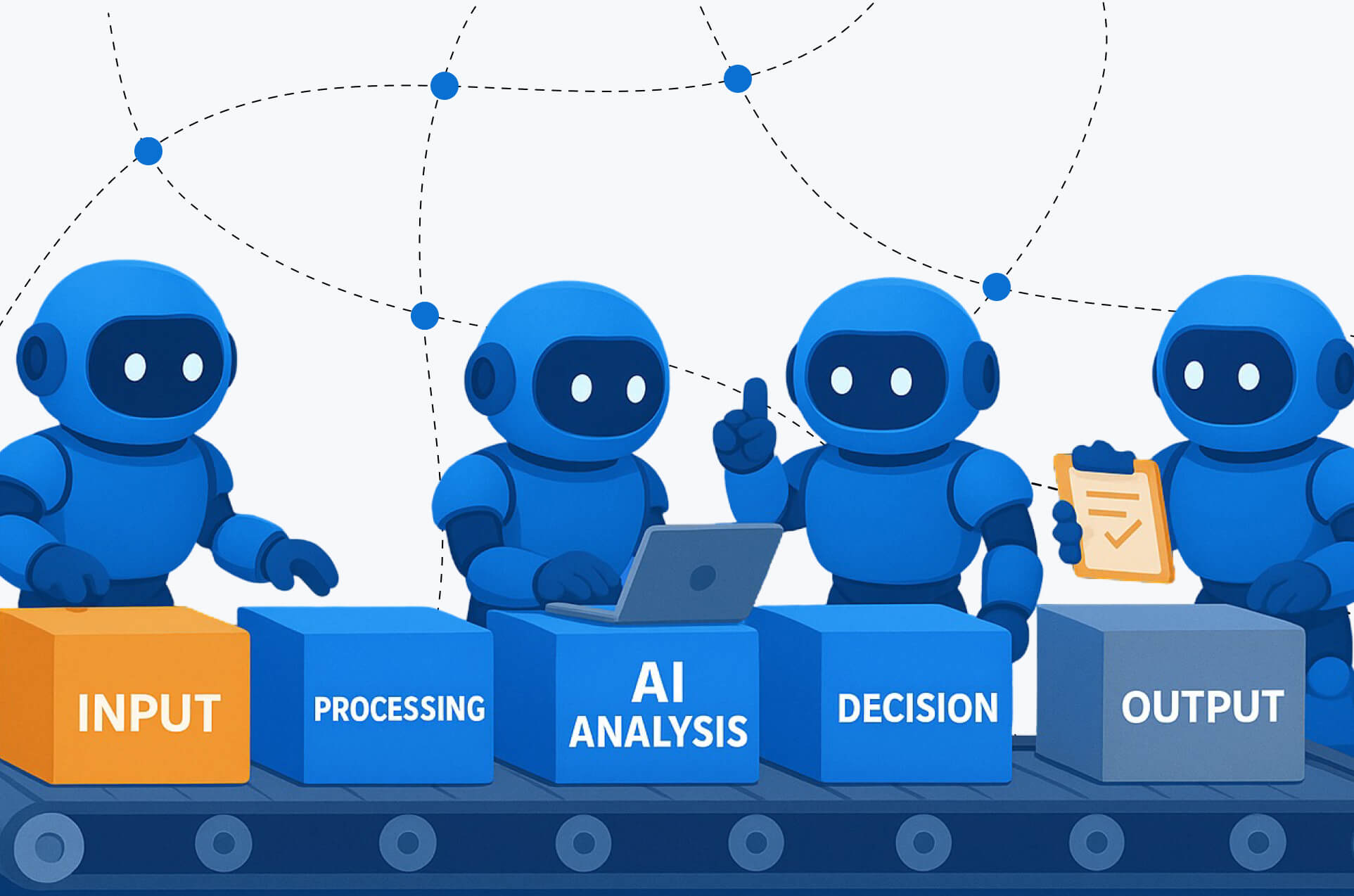
#1. Perceive (Real-Time Data Acquisition & Understanding). Agentic AI begins by gathering data from multiple sources — sensors, databases, digital interfaces, or the web — to stay fully in tune with its environment. The AI processes incoming data to extract relevant features, identify patterns, and build context.
#2. Reason (Goal Setting & Strategic Planning). Once the system has the data, it sets goals based on programmed intent and real-time insights. A large language model typically acts as the reasoning engine here — understanding tasks, generating solutions, and orchestrating the work of other specialized models (e.g., for vision, content generation, or recommendations).
Techniques like retrieval-augmented generation (RAG) help pull in accurate data from proprietary sources to support smarter decisions.
Agentic AI also breaks down complex goals into manageable subtasks and creates step-by-step plans. It’s even capable of checking its own work — and, if needed, escalating to a human when it hits a wall.
Curious how agentic AI fits into your tech stack or business strategy?
Let's chat! Our experts will help you identify high-impact use cases, avoid common pitfalls, and map out a roadmap tailored to your business.
#3. Act (Task Execution with Guardrails). Agentic AI integrates with external tools and APIs to carry out actions across digital environments. This could range from filling out forms and sending emails to processing transactions or orchestrating workflows. Guardrails can be added to ensure compliance and safety — for instance, restricting financial approvals above a certain limit to human oversight.
#4. Learn (Feedback Loop & Continuous Optimization). After each action, the system monitors outcomes and collects feedback. This data flywheel enables agentic AI to refine its models, adjust strategies, and become more efficient over time. The more it works, the smarter and more reliable it becomes.
How does agentic AI work
Types of AI Agents in an Agentic Architecture
Agentic architecture bundles agents into logical domains, so every team — from sales to ops — gets their digital sidekick. Furthermore, you are not locked into a walled garden. This setup is plug-and-play with third-party agents, even ones built outside your current stack. That means you can keep leveling up your ecosystem — no need to rip and replace what's already humming. Let's peek under the hood at the two main system types powering these agents:
Single-Agent Systems
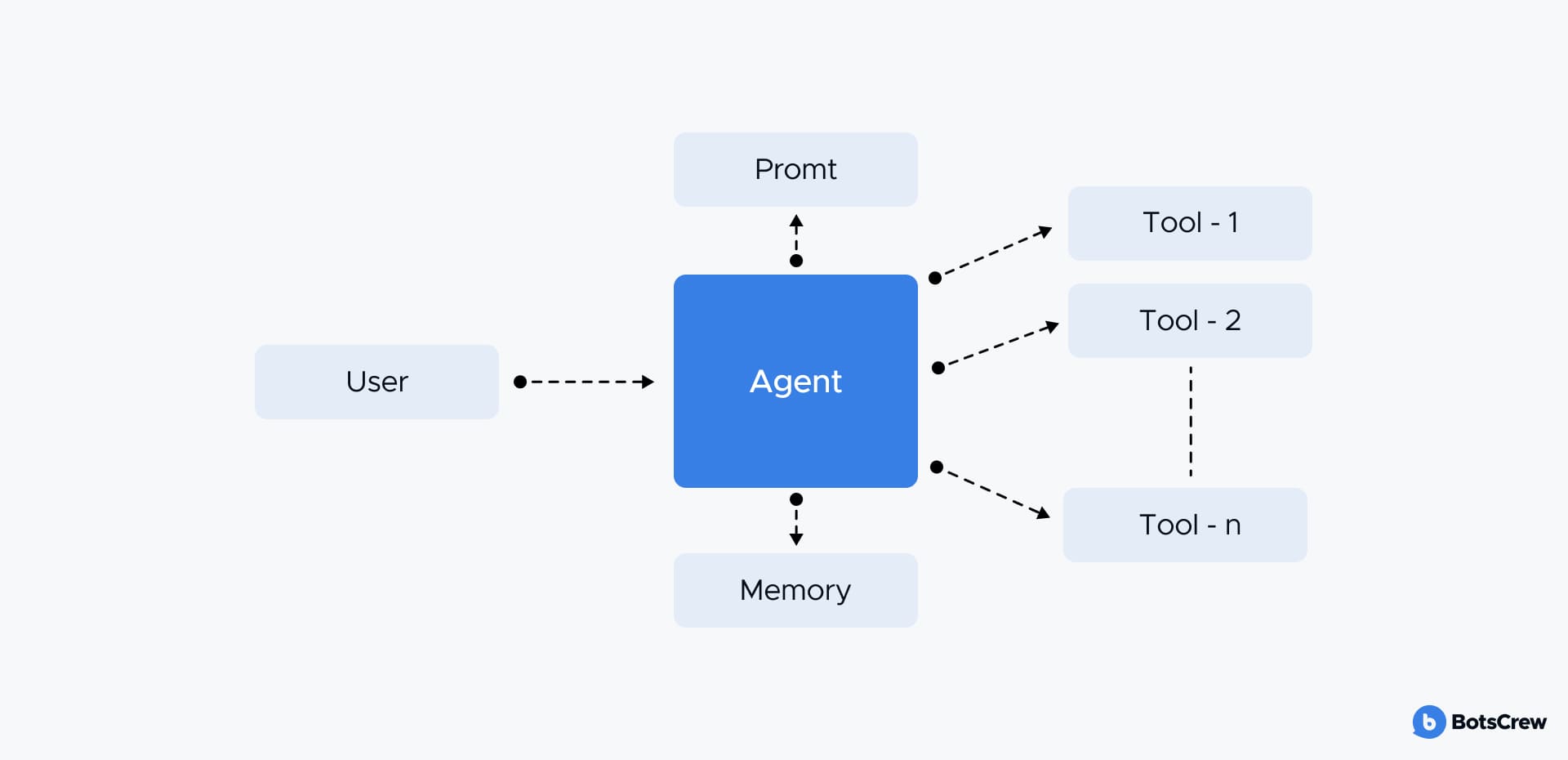
One agent, loaded with the right tools and powered by an LLM, maps out the plan, executes the steps, and delivers the result — from start to finish.
Why go solo? Single agents are easy to maintain, fast to deploy, and have consistent performance. They are perfect for tasks where one brain is better than a committee.
However, they are not ideal for high-volume, fast-changing workflows. Scaling gets tricky. You might run into memory bottlenecks or need a serious rewire to handle broader missions.
Multi-Agent Systems
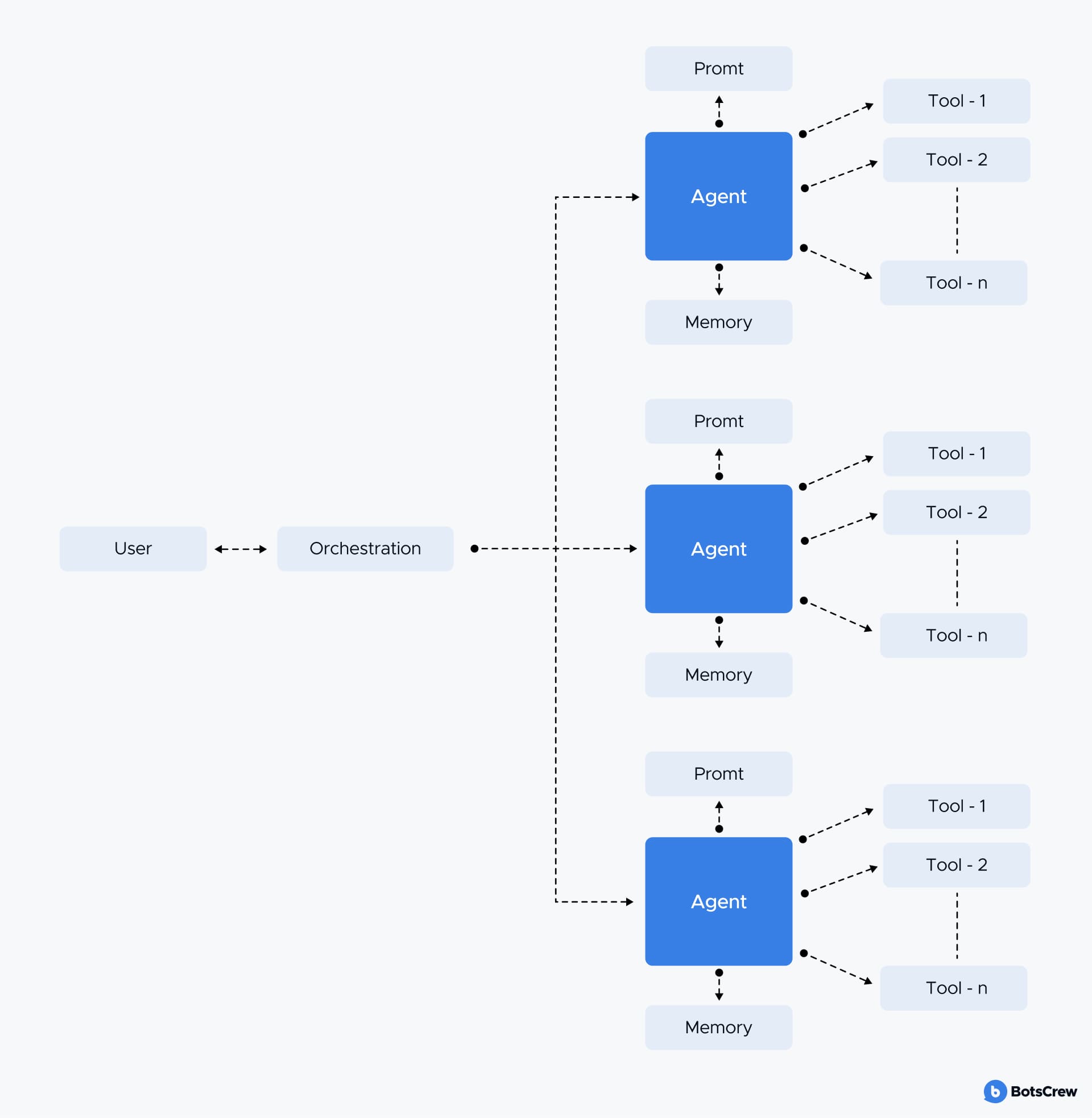
Multi-agent systems (MAS) bring multiple agents together, each with its skill set, tools, and personality. These agents play to their strengths, tag-team on complex workflows.
Why it matters: MAS is built to scale. Need to add a new domain or task type? Just drop in a new agent and keep moving — no major rework is required.
Heads up though: you'll need a strong orchestration layer to keep everyone on the same page.
Where the Real Value Is Being Created
Back-office operations remain the highest-ROI category, because they're high-frequency, rule-governed, and historically under-automated. Accounts payable agents that process invoices, flag exceptions, and route approvals. Compliance agents that continuously monitor transactions against regulatory frameworks and surface anomalies before they become audit findings. Data reconciliation agents that cross-check figures across systems and resolve discrepancies without human involvement.
IT operations and incident response is emerging as a category where the ROI case is almost mathematically undeniable. Multi-agent orchestration in this domain reduces enterprise incident response time significantly while preventing outages that can cost tens of thousands of dollars per hour. When a single prevented Cyber Monday outage is worth more than a year of engineering budget, the ROI math becomes very simple.
Customer-facing operations are maturing rapidly, but with an important nuance. The customer service chatbot — long the poster child for enterprise AI — is giving way to something more sophisticated: agents that answer questions but also can take actions on behalf of customers, routing through backend systems to actually resolve issues rather than pointing to a FAQ.
Supply chain management is seeing early but compelling results from multi-agent approaches that monitor supplier performance, predict demand fluctuations, optimize inventory across warehouses, and surface shipping options — all simultaneously, all in real time. The value here comes not from any individual action but from the coordination across dozens of variables that no human team could track simultaneously.
Trying to identify your highest-ROI starting point?
Book a call with our agentic AI strategy experts. Identify your highest-impact agentic AI opportunities — mapped to your workflows, your team, and your readiness to act. No commitment required.
The Dark Side of Autonomy: Key Challenges in Agentic AI Adoption
The potential of agentic AI is significant, but it's important to be mindful of the potential pitfalls and risks that come with this transformative technology:
Security and privacy
As AI agent systems interface directly with enterprise databases, internal APIs, customer-facing platforms, and real-time decision engines, the attack surface expands dramatically. These agents may access everything from PII and financial records to confidential IP and operational blueprints. Enterprises must shift toward zero-trust AI architecture, robust access control layers, and AI-specific intrusion detection systems to ensure ongoing protection.
Ethics and accountability
Agentic AI acts with increasing autonomy — making decisions and initiating actions. This raises critical questions about moral agency and responsibility:
If an agentic AI fires an employee, denies a loan, or influences a medical decision, who is liable?
Furthermore, these systems can replicate or amplify bias if not carefully monitored — leading to discrimination at scale under the guise of objectivity.
Continuous monitoring and improvement
Agentic AI systems can learn, adapt, and even evolve goals within defined constraints but this presents a monitoring challenge unlike any other software paradigm. Enterprises need tools that track intent shifts, unexpected behavioral patterns, and goal divergence. Establishing kill-switch mechanisms or graceful degradation protocols can help halt harmful behavior in high-stakes environments (e.g., trading systems or critical infrastructure).
Interoperability and System Complexity
Agentic AI acts as a middleware layer, pulling data from silos, calling APIs, and coordinating tasks. But this distributed setup is fragile: one broken API or bad data source can ripple across the system.
Add multiple services, clouds, or agents, and you get latency, versioning issues, data inconsistencies, and even agents conflicting or deadlocking. This demands intelligent orchestration & AI agent frameworks and resilience engineering, borrowing principles from distributed systems and chaos engineering.
Regulatory Compliance
Agentic systems risk violating laws like GDPR, HIPAA, or CCPA if they lack transparency or misuse sensitive data. With frameworks like the EU AI Act, many will be classified as high-risk, requiring strict oversight, audits, and documentation. As a result, AI systems may need to adapt their behavior by region, with built-in, location-aware compliance rules.
Need clarity on security, compliance, or monitoring?
Lock in a call with our CTO and get the answers and insights you need.
Best Practices for Secure, Ethical, and Scalable Agentic AI Adoption
How to build agentic AI? To unlock the true potential of agentic AI while staying in control, companies must adopt a deliberate, principle-driven approach. We've put together key best practices for implementing agentic AI safely, ethically, and at scale.
Security and compliance
Agentic AI operates autonomously, often with access to highly sensitive data and critical systems. This elevates security from a tech problem to a business continuity risk.
Best Practices:
✅ Zero trust architecture. Every agent action should be treated as untrusted by default. Require identity verification, token-based access, and continuous authentication.
✅ Audit trails & forensics. Log all decisions, actions, and interactions in tamper-proof formats to support internal audits and regulatory inquiries.
✅ Granular permissions. Use role-based access control (RBAC) and policy-based management to restrict what agents can access or influence.
✅ Privacy-by-design. Integrate privacy risk assessments at every stage — from training data selection to agent decision logic. Avoid training agents on sensitive data sets unless explicitly consented.
Continuous monitoring and improvement
Continuous updates aren't optional; they are a survival strategy.
Best Practices:
✅ Behavior drift detection. Use anomaly detection models to flag deviations in agent behavior from expected patterns.
✅ Live metrics dashboards. Monitor KPIs like task completion rates, escalation frequency, failure rates, and user satisfaction scores.
✅ Closed-loop feedback systems. Allow users and admins to give real-time feedback on agent decisions — and loop that back into training or fine-tuning processes.
Human-in-the-loop and escalation paths
Autonomy does not mean isolation. A mature agentic system knows when to pause and ask for help.
Best Practices:
✅ Confidence thresholds. Let agents act autonomously only when confidence levels are above a threshold. Otherwise, auto-escalate.
✅ Tiered decision rights. Define a framework for which actions can be automated vs. which must always include human approval.
✅ Transparent escalation. When agents escalate, provide humans with a concise reasoning summary and key decision variables.
Governance, roles & operational playbooks
AI agents need policies, just like people. And businesses need playbooks for agent lifecycle management.
Best Practices:
✅ AI governance committee. Establish a cross-functional team (tech, legal, ethics, ops) to oversee agent policy, escalation incidents, and system changes.
✅ Agent role design. Don't let agents evolve chaotically. Define role boundaries, scopes of influence, and KPIs per agent type (support bot, finance assistant, ops planner).
✅ Version control & rollbacks. Track every change to your agents' logic or training data. Be able to rollback fast if a deployment backfires.
Discover the core strategies, real-world use cases, and technical insights from BotsCrew clients behind successful agentic AI adoption.
Ready to Move from Experimentation to Production?
Most companies reading this are somewhere in the middle: they believe in agentic AI, they've run a pilot or two, and they're stuck on what to actually do next.
We work with companies at every stage of the AI journey, and the story is remarkably consistent: a capable internal team decides to tackle agentic AI themselves, makes progress in the first few weeks, and then hits a wall — data that wasn't AI-ready, infrastructure that wasn't designed for it, edge cases that multiply faster than they can be patched.
Building production-grade AI systems is a different discipline from building software. The gap between a working prototype and a reliable, scalable system is where most in-house efforts stall — from lack of accumulated, domain-specific experience with exactly these failure modes.
Here are several ways we can help, depending on where you are:
If you're still mapping the opportunity — contact us to map your highest-priority AI opportunities. A structured conversation with our team to identify your most valuable workflows, surface governance gaps, and define quick wins — so you start with clarity, not guesswork.
If you're scaling and hitting walls — request a governance & enterprise AI agents architecture review: for organizations with agents in production that need help with observability, access control, or cross-agent orchestration. We typically spot the highest-risk gaps in the first session.
Teams that come to us after a failed internal attempt almost always say the same thing: they wish they'd reached out sooner.
Whether you're exploring agent-led customer support, intelligent IT automation, or next-gen knowledge management, our custom solutions are designed to integrate seamlessly with your existing systems while unlocking the full potential of agentic AI. We make your journey smooth with no-cost, hands-on demos and expert consultations that help you experience the possibilities before making any commitment.
Book a Demo — See Agentic AI in Action!
Get a personalized walkthrough of how agentic AI can supercharge your workflows, reduce operational drag, and scale intelligence across your enterprise.